PRISCILLA TSE NOK IN — AI PRODUCTION COORDINATOR

AI production
for what’s next.

I coordinate AI image and video production at Blink Production HK, combining commercial delivery with hands-on experimentation across generative media. I also build and ship AI-assisted products, bringing four years of production judgment alongside digital-asset market literacy.

AI PRODUCTION × PRODUCT THINKING × DIGITAL-ASSET LITERACY

NDA-SAFE SELECTED WORK

03 CASE STUDIES

INTERVIEW EDIT

(01)

HYBRID PRODUCTION / PHOTOGRAPHY + AI

From plain-screen capture to social-ready worlds
PROJECT CONTEXT

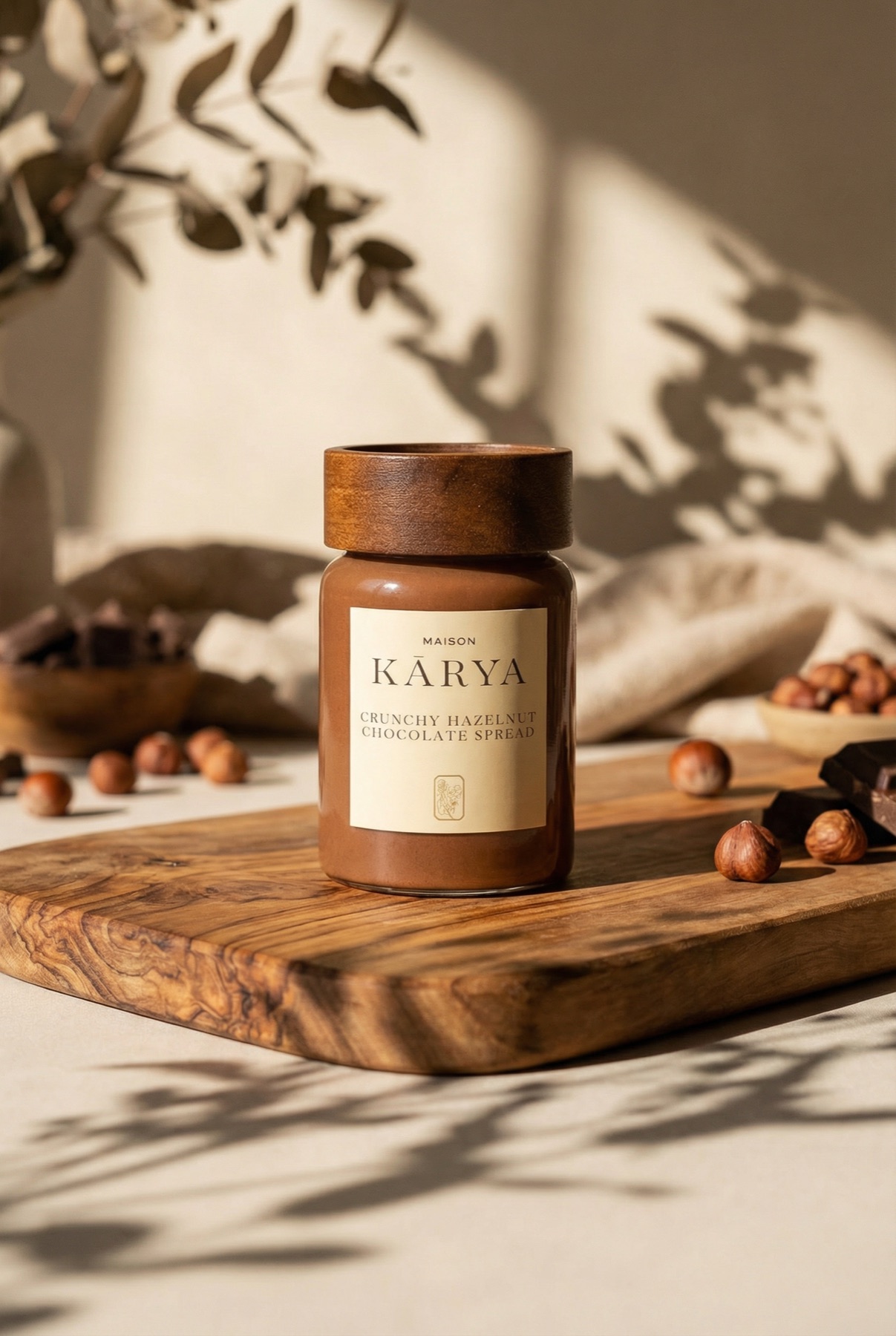
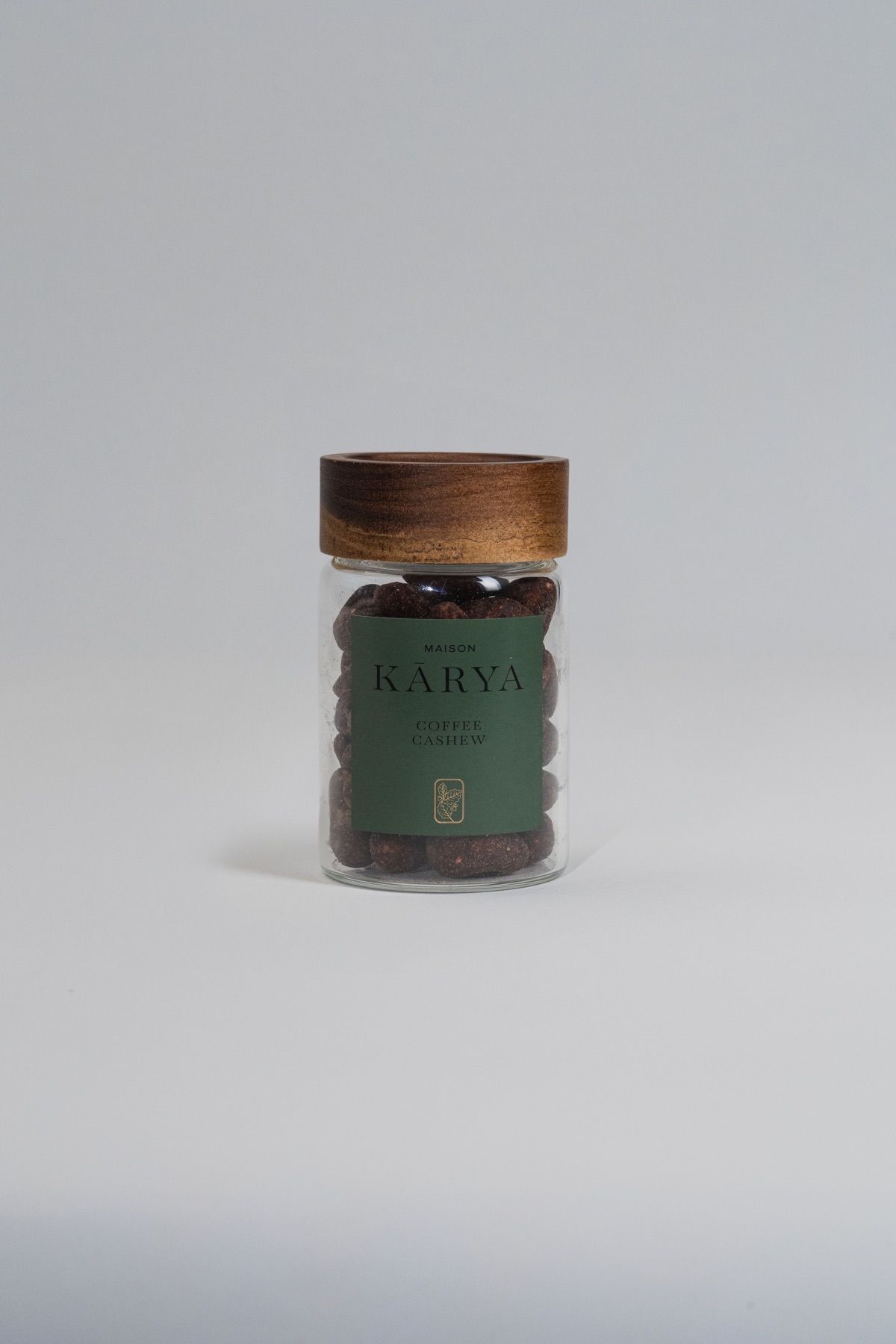
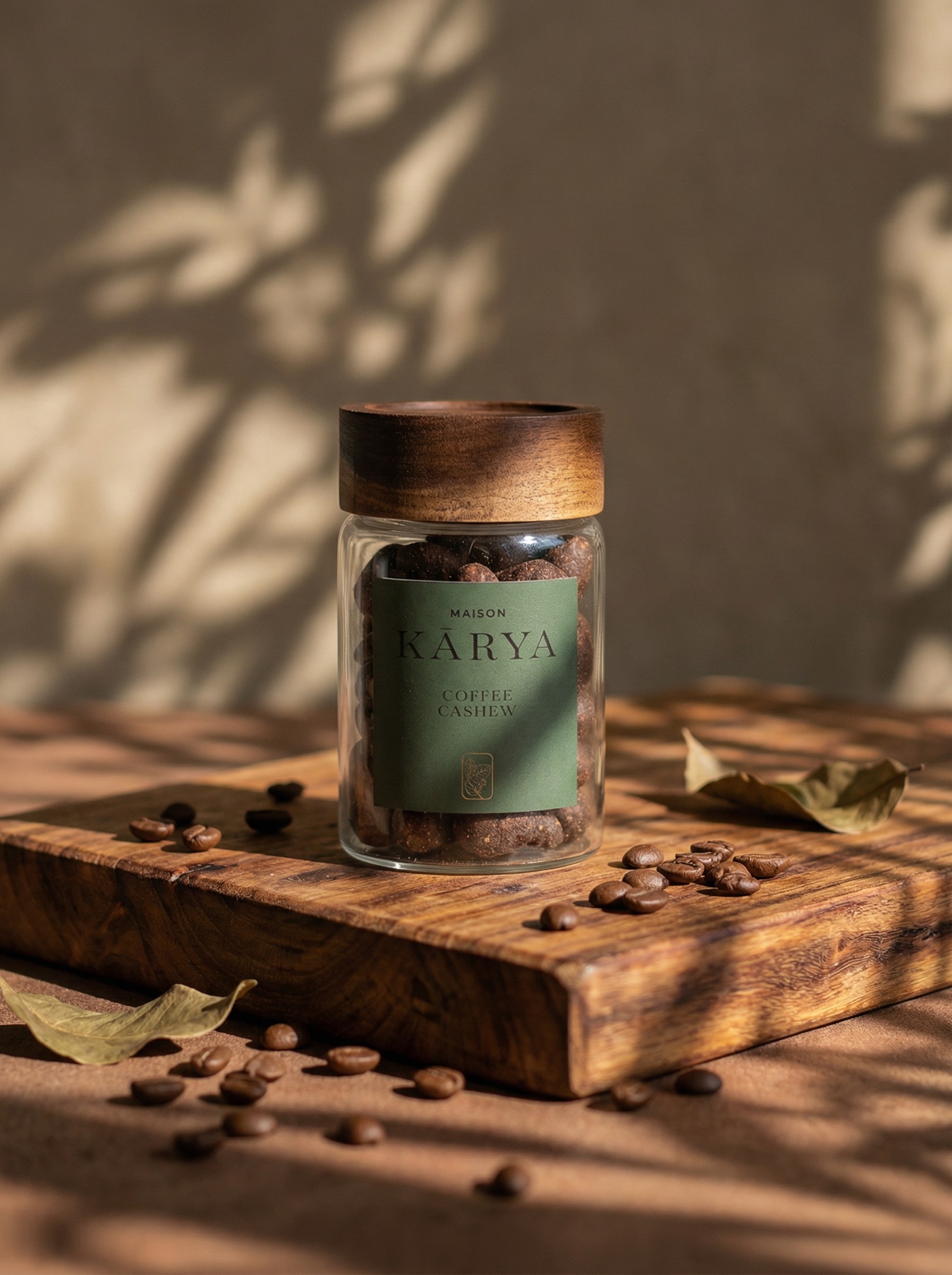
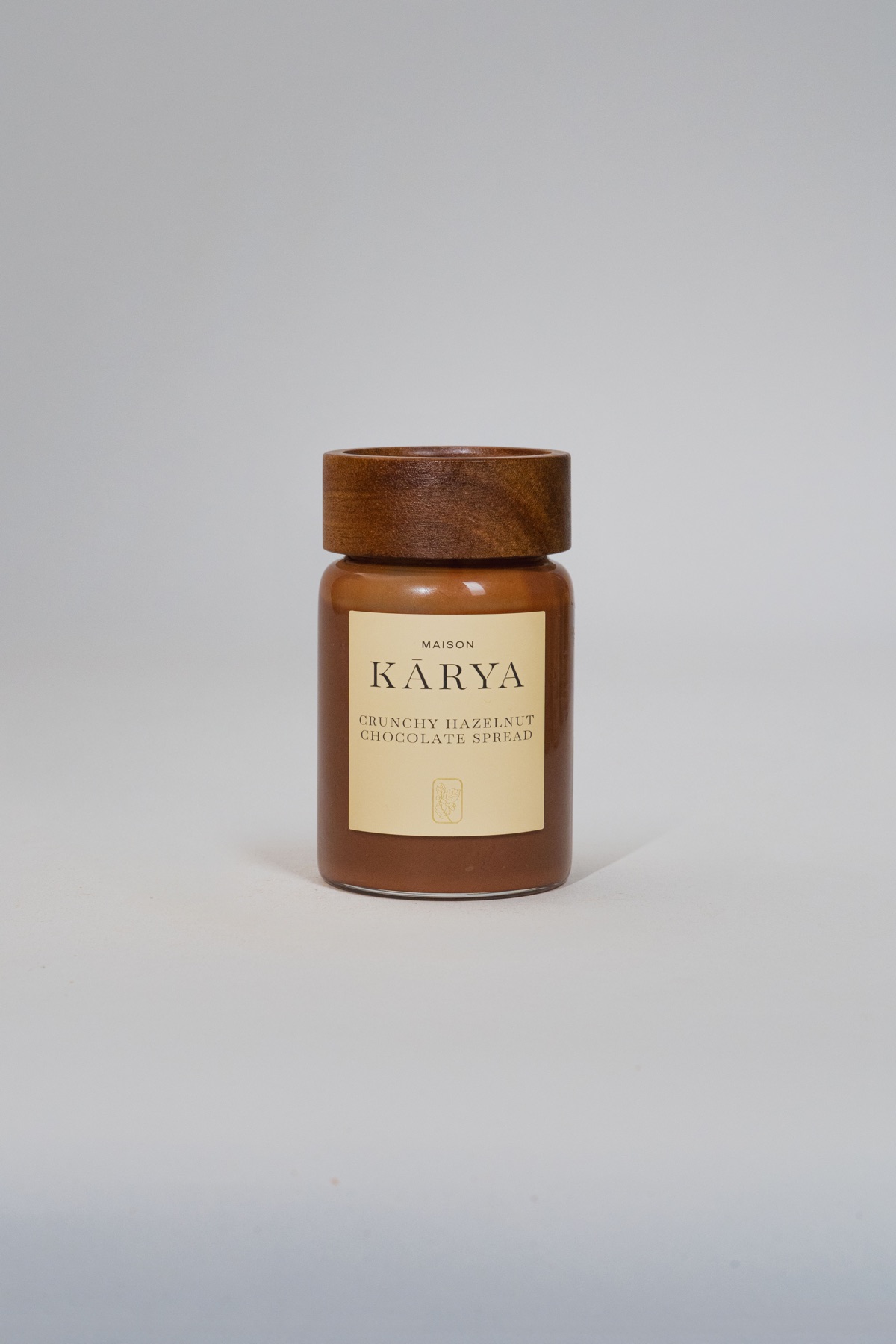
I developed a hybrid product-image workflow designed to turn a simple studio capture into a broader library of social-ready product visuals. The product was photographed against a plain screen so I could begin with a clean, reliable reference while keeping the packaging, proportions and materials grounded in a real object.

TOOLS USED

Controlled studio photography; retouching; ComfyUI-based image workflows; multiple generative image models for image-to-image exploration; Magnific for detail enhancement and final-resolution output.

APPROACH

I first created clean base photographs with neutral lighting and minimal background information. I then used the product captures as structural references across several AI image models, testing different ways to build settings, props, lighting and mood around the original pack shot. I compared each model for product fidelity, realism and art-direction control, then refined the strongest outputs through targeted iterations and finishing. The aim was not to replace photography, but to combine the accuracy of a real shoot with the speed and creative range of generative production.

OUTCOME

I delivered approximately 60 product base shots within two weeks, extending each product into at least two social-ready variants in the first round. Without AI, the same studio booking, props, art direction and full visual planning would typically take more than a month before the first round was ready. The images shown pair the plain-screen captures with the finished AI-assisted scenes.


(02)

END-TO-END STORYTELLING / STORYBOARD + VIDEO

One-person AI production, from character to final sound

FINAL VIDEO / 01:20Concept, character design, storyboard, image and video generation, audio, SFX and editing by me
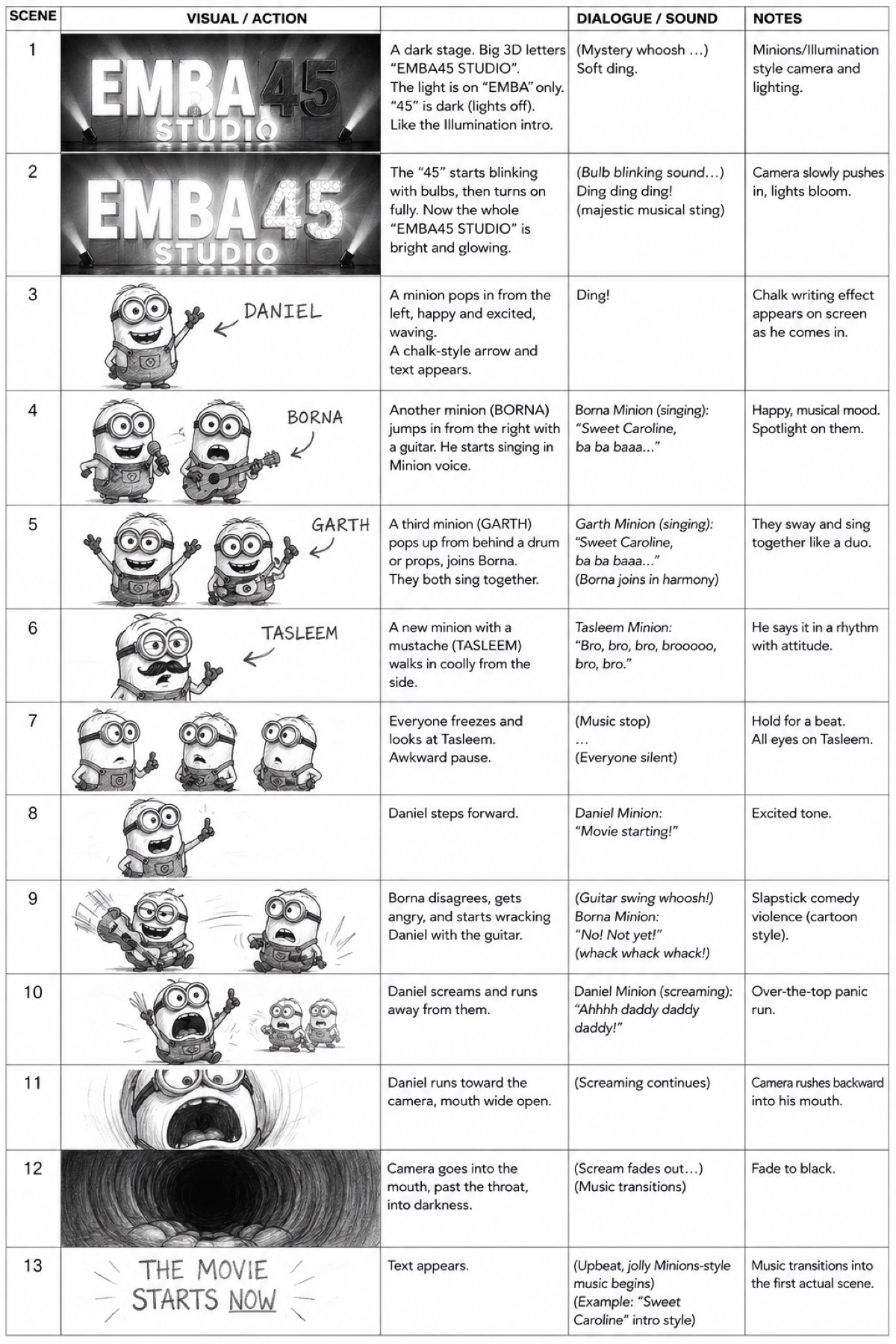
Thirteen-scene storyboard with visual action, dialogue, sound and camera notes
STORYBOARD / PRODUCTION MAP13-scene production storyboard covering action, dialogue, sound, timing and camera direction

PROJECT CONTEXT

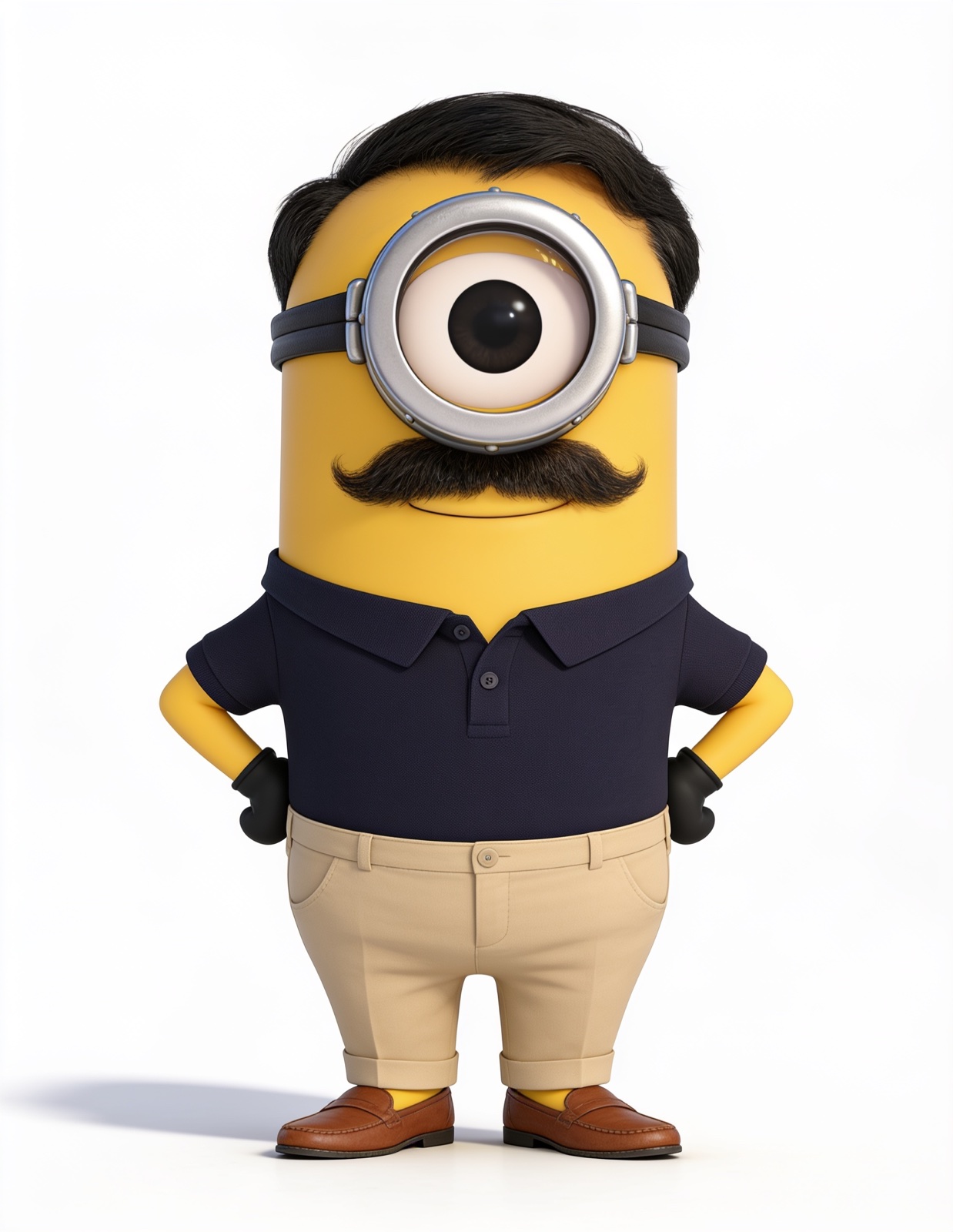
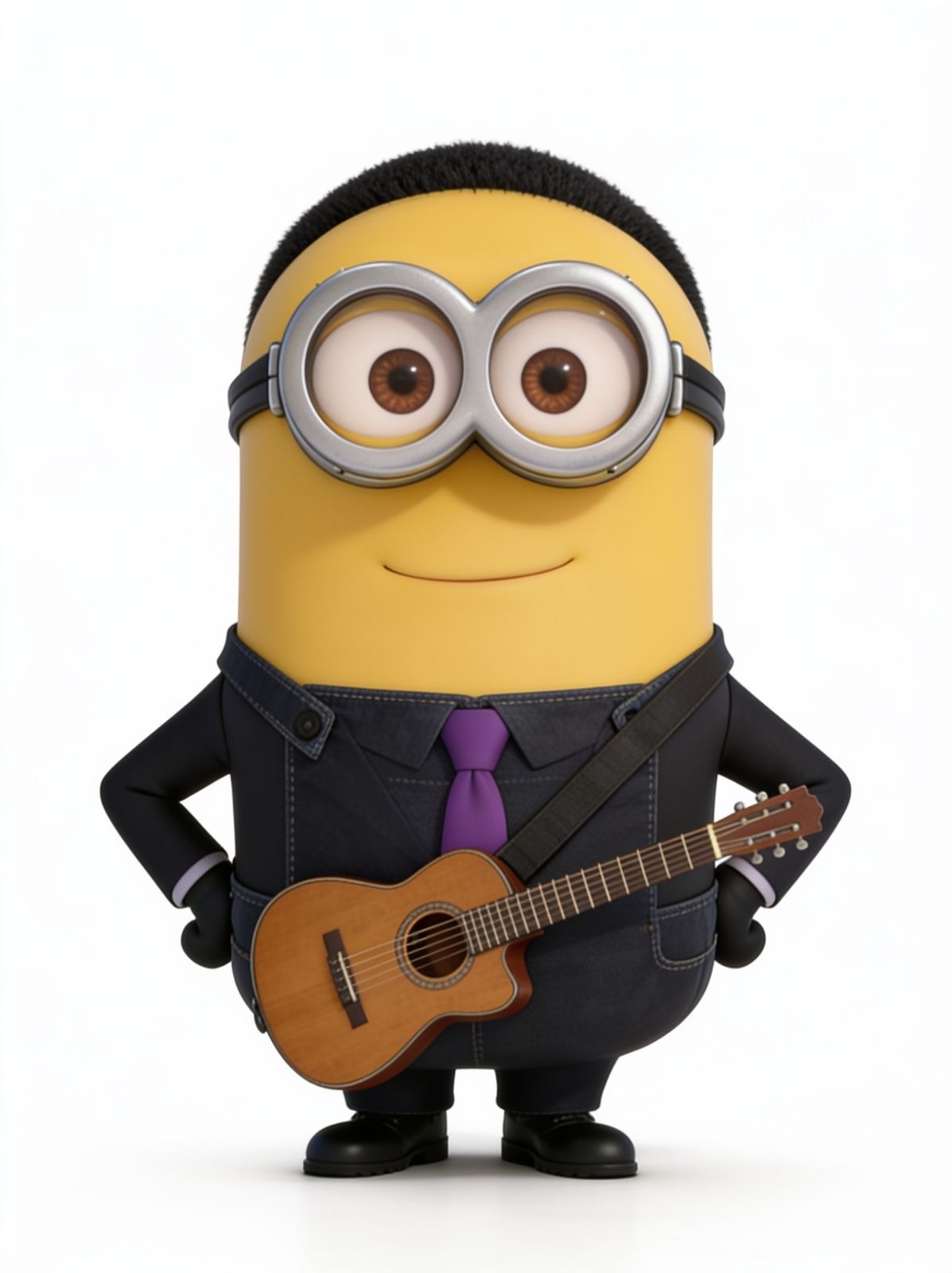
I developed a character-led video as an independently managed AI production. Four bespoke characters were designed from the visual traits and personalities of real people, translated into a playful Minions-inspired world. I used the storyboard as the production backbone, defining character roles, comic timing, camera movement, dialogue, music cues and sound effects before generating the final scenes.

TOOLS USED

Claude, Gemini and DeepSeek for concept development and planning; Midjourney and ComfyUI for character and image development; Seedance and Kling for motion; AI audio tools for voice, music and SFX; editing tools for assembly and finishing.

APPROACH

I owned every stage of the pipeline: story development, character design, shot structure, storyboard, image generation, video generation, music, SFX, client communication and final editing. I broke the narrative into numbered scenes with visual action, dialogue, sound and production notes, then used that structure to monitor progress, identify missing shots and control continuity. I tested outputs against character consistency, performance and pacing, revised weak scenes and kept the project moving without external task management.

OUTCOME

The result is an approximately 80-second film, with 13 scenes produced and edited independently in around three days from concept to final sound. The finished demo, character studies and storyboard show how I turn an open-ended idea into a production-ready sequence, manage milestones and carry a multi-stage AI project through delivery. This is a private, non-commercial style exploration; any commercial work would require participant consent and third-party style or music clearance.

(03)

INFORMATION DESIGN / ART DIRECTION + AI

AI infographics, independently art-directed

PROJECT CONTEXT

I created these AI-driven visual communication projects for a fast-moving news-delivery environment. Each began with a practical information challenge—making public-safety guidance or a dense list of travel offers quick to scan, easy to remember and visually suited to its intended audience.

TOOLS USED

Claude, Gemini and DeepSeek for research support and content structuring; generative image models for illustration and visual development; AI-assisted typography exploration; layout and image-editing tools for hierarchy, checking and production-ready finishing.

APPROACH

I handled the full process myself: research, information hierarchy, copy structure, art direction, visual system, image generation, layout and final checks. I first identified the one message the audience needed to retain, then organised supporting details into a clear reading order. I used AI to accelerate visual exploration while actively reviewing text accuracy, icon meaning, contrast, legibility and consistency. I also set my own milestones, monitored open tasks and revised the work until the information and visual tone supported each other.

OUTCOME

The finished pieces translate different kinds of information into distinct but accessible visual systems: a bold safety message built around one memorable symbol, and a modular travel guide organised for comparison. I typically produce around 30 news graphics per week, with simple, verified information-to-visual turnarounds completed in as little as 30 minutes. Together, they demonstrate end-to-end ownership, audience awareness and the discipline to manage AI-generated content as a communication product rather than a one-off image.

SHIPPED PRODUCTS

Building,
not just briefing.

Beyond client production, I build and ship my own products using AI-assisted development—Claude for architecture and design, Codex for implementation, and Gemini API for inference. Four are deployed. One runs daily inside a commercial production studio. A scheduling SaaS platform is in build, owned end to end.

(04)

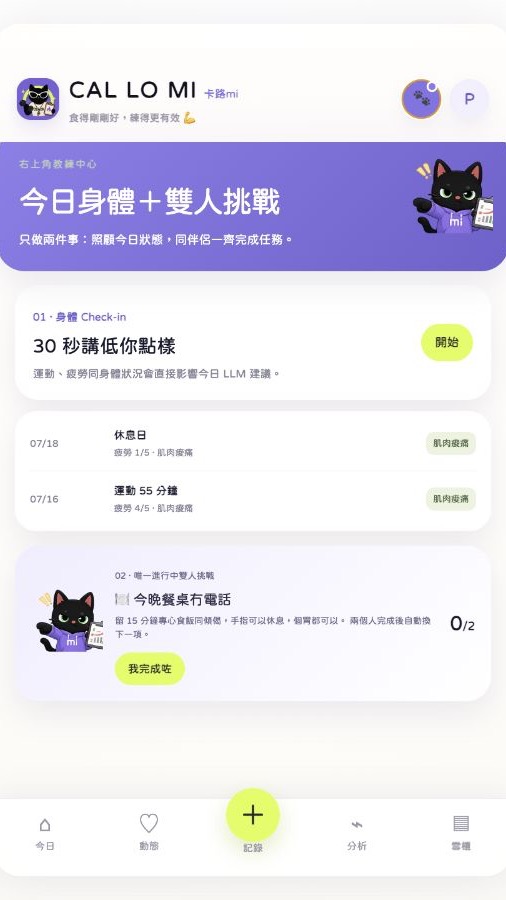
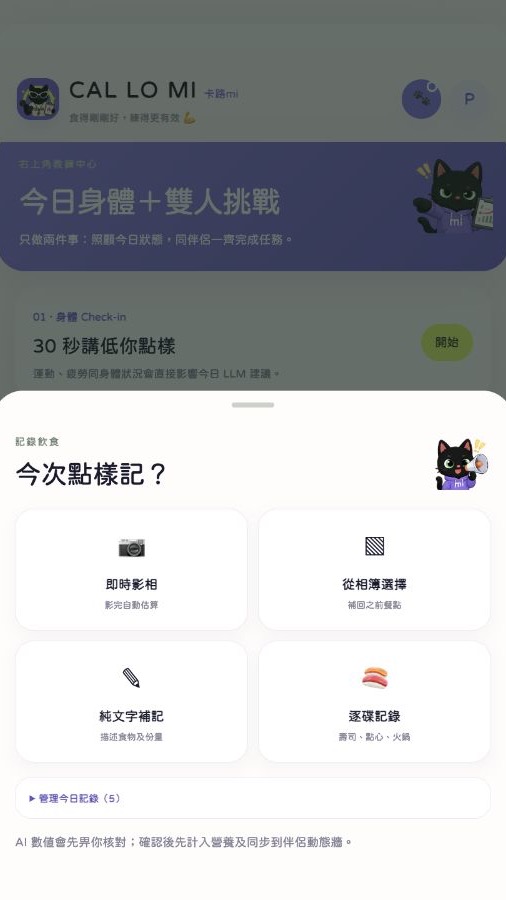
CAL LO MI / AI NUTRITION TRACKER

Making AI useful
in daily life.

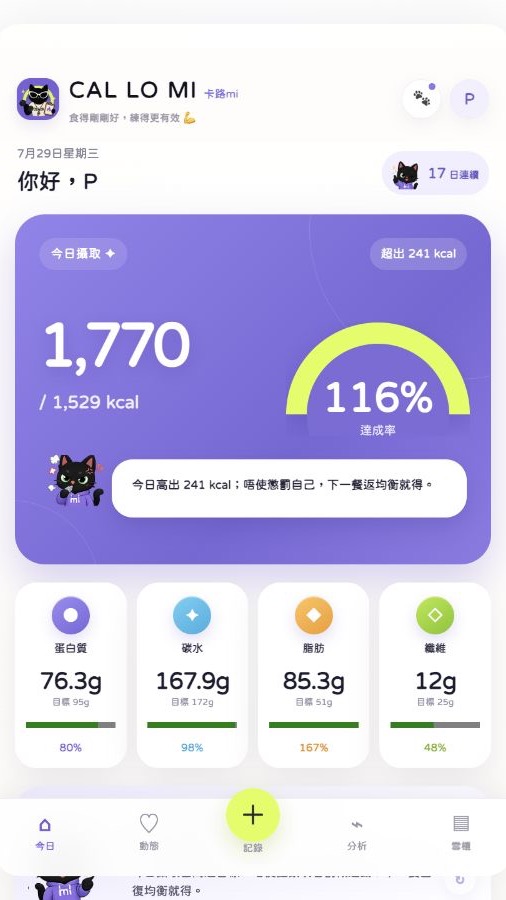
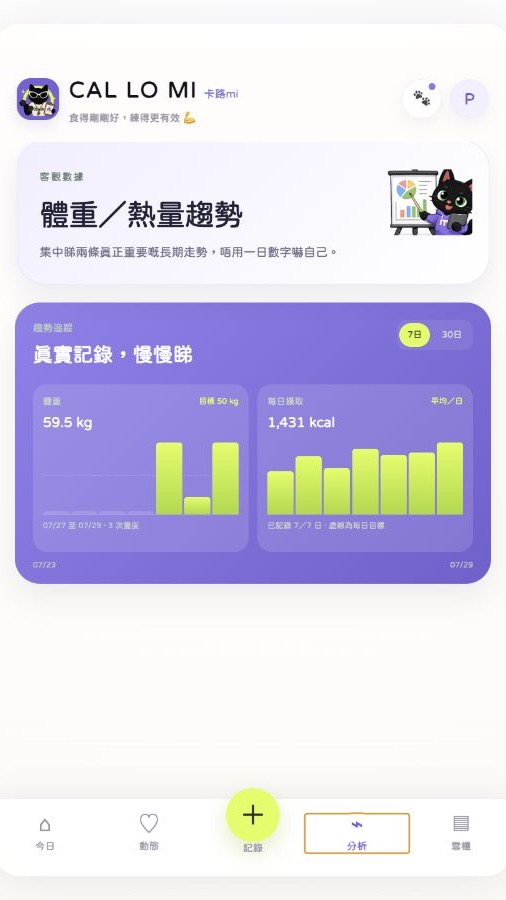
A meal-logging and nutrition-tracking app for two users. Photo, album or text input is processed for calorie and macro estimation, then confirmed by the user before it commits—a human-in-the-loop pattern that keeps AI convenience without inheriting AI error. Personalised targets are calculated from biometrics, including TDEE, NEAT and daily macros, with Apple Health and Garmin activity integration.

After a seven-day live test, two real users continue to use the product daily, logging 8–12 interactions combined. The data model distinguishes AI-estimated values from verified database values, so the user always knows what they are looking at. I have already iterated the experience from one long scrolling view into date- and user-based records, with messages and macro-nutrient detail available on demand.

STACK / CLAUDE · CODEX · GEMINI API
Currently exploring local LLM hosting to reduce inference cost.

(05)

BLINK LOG SHEET / INTERNAL PRODUCTION TOOL

The tool I built
for the studio I work in.

Crew coordination at Blink ran on WhatsApp threads and verbal briefings. Call times, addresses, shooting specs and delivery expectations lived in scattered messages, and the cost showed up on set—wrong resolution, missed contacts, or a shooter arriving to a brief that had changed two days earlier.

Blink Log Sheet generates a per-shooter call sheet and exports it as a single shareable JPEG. An image, not a link or a login—because the tool had to survive contact with how crew actually communicate, not how I wished they did. Each sheet carries date, call and wrap time, event, role, address, on-site contact, shooting specs, client requirements and delivery deadlines.

The design constraint was adoption, not features. I cut an original spec that included equipment checklists, permissions and offline sync down to one job done properly. It is now the studio's daily coordination record.

STACK / CLAUDE · CODEX
In use at Blink Production HK. A full scheduling SaaS is in build as the successor.

(06)

LOGOMAN / GOAL TRACKING + PROGRESSION

Testing whether
progression beats a checklist.

Most goal trackers are checklists with streaks bolted on. LogoMan replaces the checklist with a creature you raise. Users declare a goal and log the time they contribute to it each day; that time converts to EXP, and the creature levels up as the goal advances.

The premise I wanted to test is that people abandon checklists because a completed task disappears, while a levelled creature persists—progress you can see is progress you protect. It reframes consistency as something you are growing rather than something you owe.

This is a retention question more than a productivity one: what keeps someone returning on day forty, not day four. Building it taught me more about engagement loops than reading about them would have.

STACK / CLAUDE · CODEX · GEMINI API

(07)

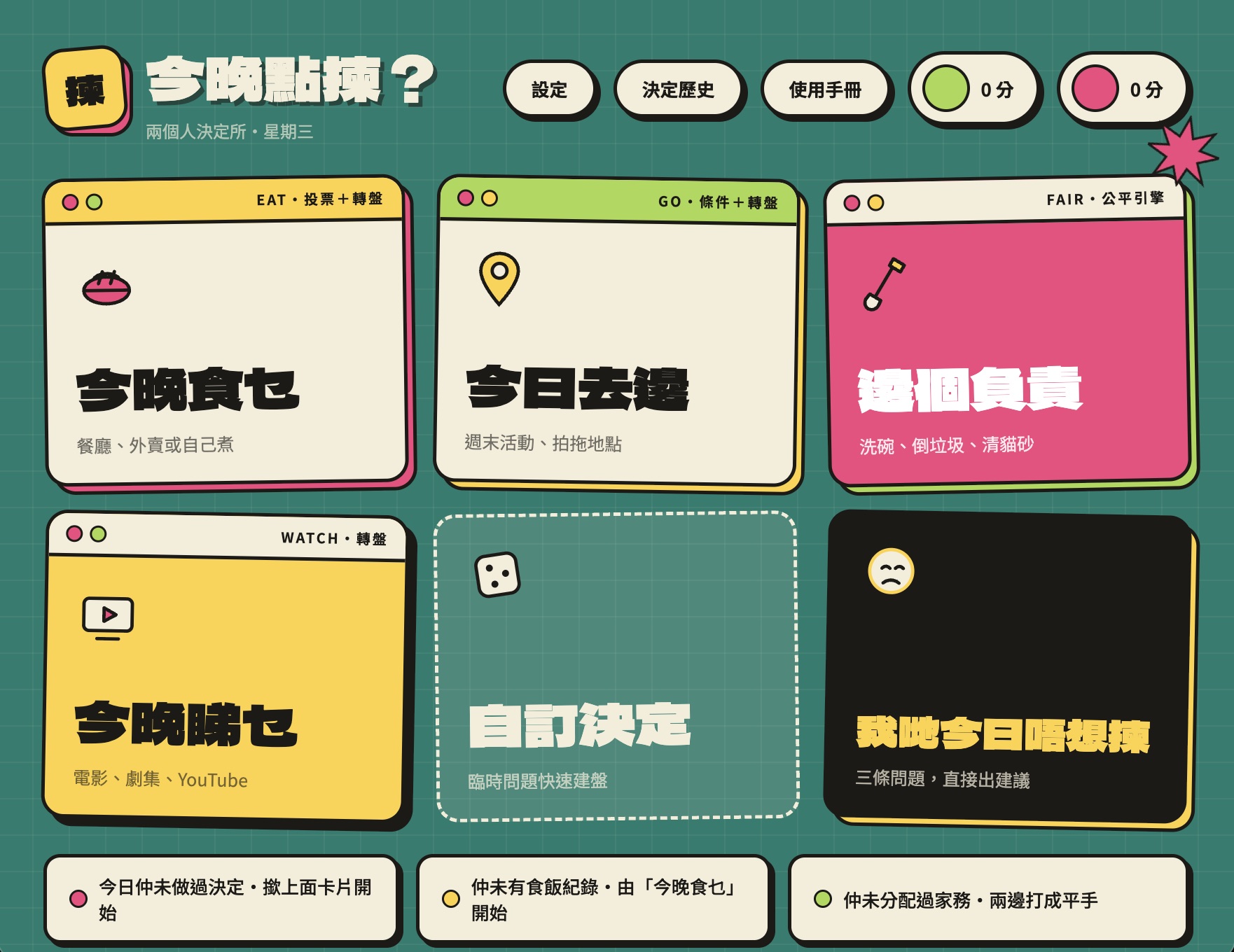
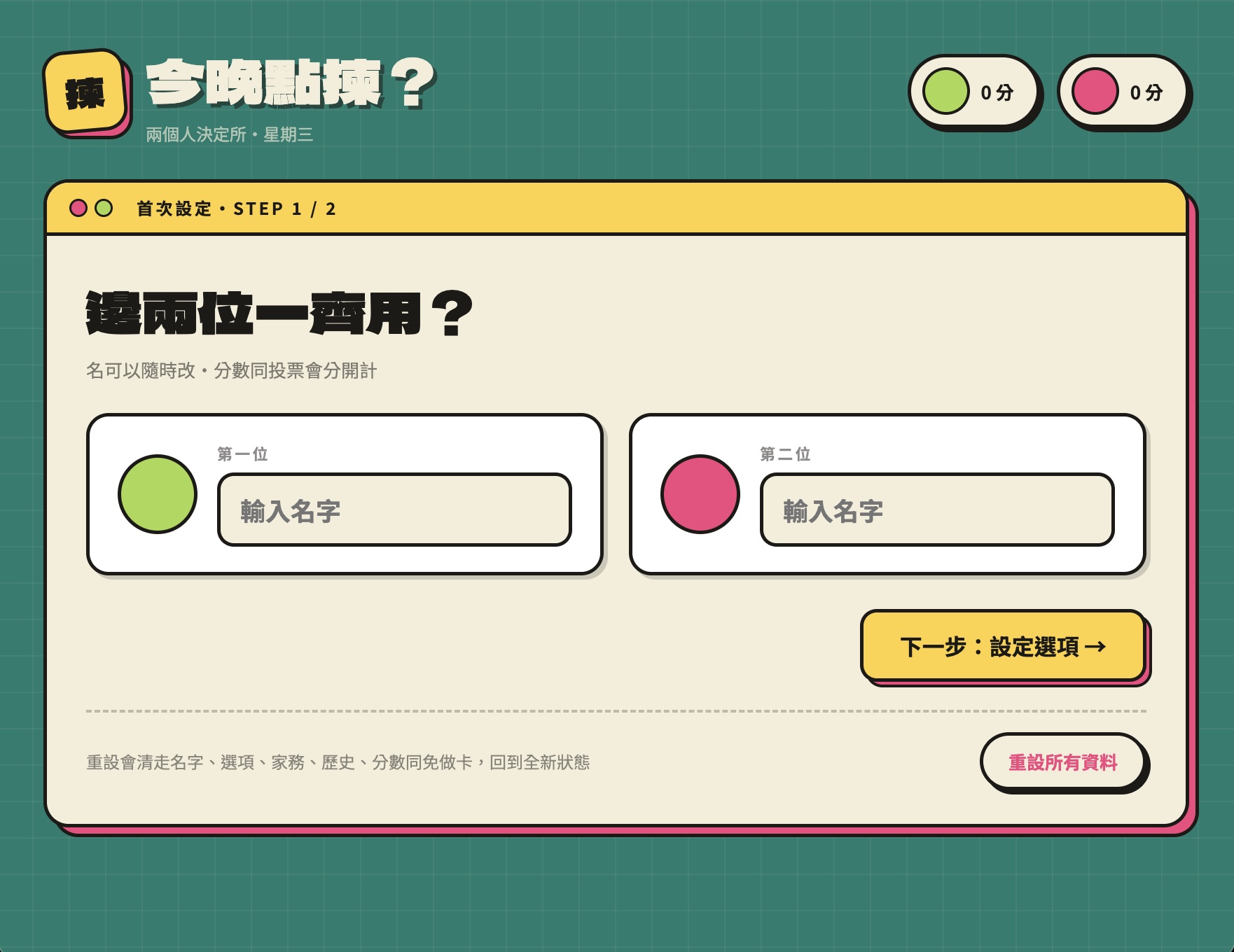
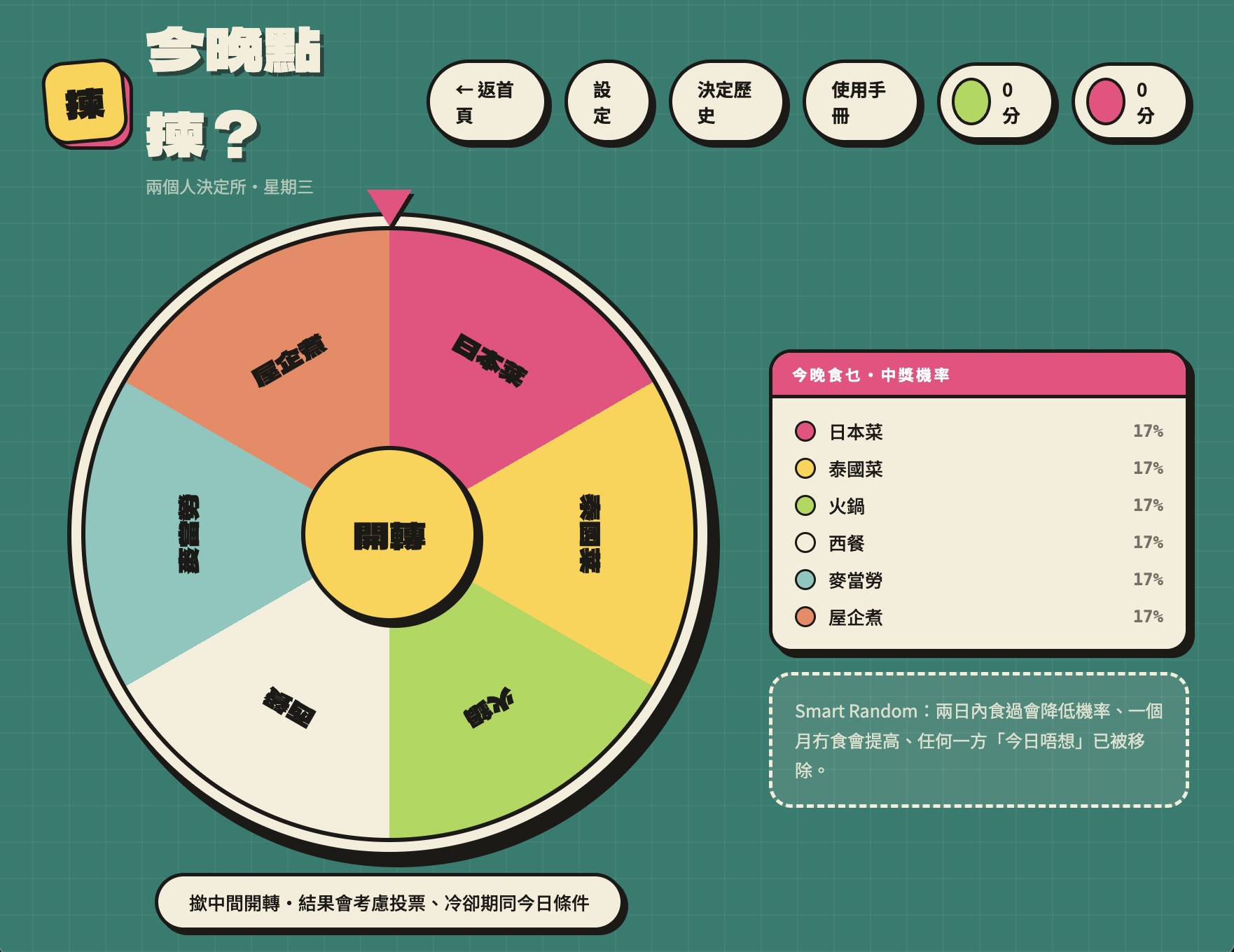
TONIGHT WE PICK / DECISION-WEB APP

One problem.
One interaction.

VIEW LIVE ↗

A decision tool for couples facing daily choice fatigue, built and deployed in two days and used daily by its two intended users. Deliberately narrow: one problem, one interaction, no feature creep. Voting, a decision wheel and fairness rules turn a small recurring friction into a lightweight shared ritual; the next product iteration is more personalised activity suggestions.

LIVE / BLACKMI-PP.GITHUB.IO/TONIGHT-WE-PICK

WHAT THESE TAUGHT ME

The distance between an idea and a working product has collapsed. What used to need a technical co-founder now needs product judgment and fluency with AI-native tooling. That shift is the same one reshaping how teams inside AI-first companies operate—and it is why I want to work inside one.

AI ECOSYSTEM OBSERVATIONS

What four years
in the trenches
has taught me.

Working across Midjourney, Seedance, Kling, ComfyUI, Claude, Gemini, Magnific and DeepSeek every week has given me a specific kind of literacy: not just how to use each tool, but how they compete, where they overlap, and what commercial workflows they actually enable.

01

Tool landscape.

The image-generation space has moved from single-model dominance to specialised stacks—Midjourney for stylised concept, Gemini for prompt adherence, Magnific for high-fidelity finish, and ComfyUI for granular control. Video is now competitive across Seedance and Kling for short-form. The Chinese and Western tool ecosystems are diverging in interesting ways—a dynamic under-appreciated in Western coverage.

02

Commercial pattern.

The projects that succeed commercially are the ones where AI extends existing production capacity rather than replacing it—hybrid workflows, not full automation. Clients still value human judgment on brand fit, taste and final approval.

03

Where the value settles.

The convergence I find most interesting sits below the applications: on-chain provenance for AI-generated assets, generative content pipelines for gaming and digital collectibles, and AI-assisted worldbuilding for open-metaverse experiences. As generation cost collapses toward zero, the scarce thing stops being the asset and becomes the record of where it came from—which is an infrastructure question, not a creative one. The layer that captures value is rarely the layer producing the output.

WHERE THIS GOES NEXT

Creative fluency.
Commercial focus.

AI production taught me how to connect emerging technology to outcomes people can actually use. I translate between creative, technical and commercial stakeholders, turn open-ended ideas into workable plans, and hold momentum through testing, feedback and delivery.

In operating—

I rebuilt Blink's image post-production workflow around AI-assisted editing, cutting turnaround from a full day or more to one or two hours per project and removing the need to outsource retouching entirely. I run two major concurrent productions alongside ongoing client work with no direct supervision, and I built the internal tool the studio now coordinates on. I am interested in the unglamorous version of this work, because that is where the compounding is.

In product—

I have coordinated commercial AI production for four years and shipped four products of my own. I know where generative models are reliable and where they are not, what human-in-the-loop actually costs to design, and how to keep an experimental project moving toward a shippable outcome.

In client-facing work—

I started my optometry career on the IFC flagship floor of a global retail chain, handling over two hundred customer visits a day at a zero-error standard, and I built an insurance client book of roughly seventy from zero under Insurance Authority regulation—prospecting through to compliance and onboarding. Front-line volume and regulated selling are both unfashionable training. Both taught me more about what customers actually decide on than any framework has.